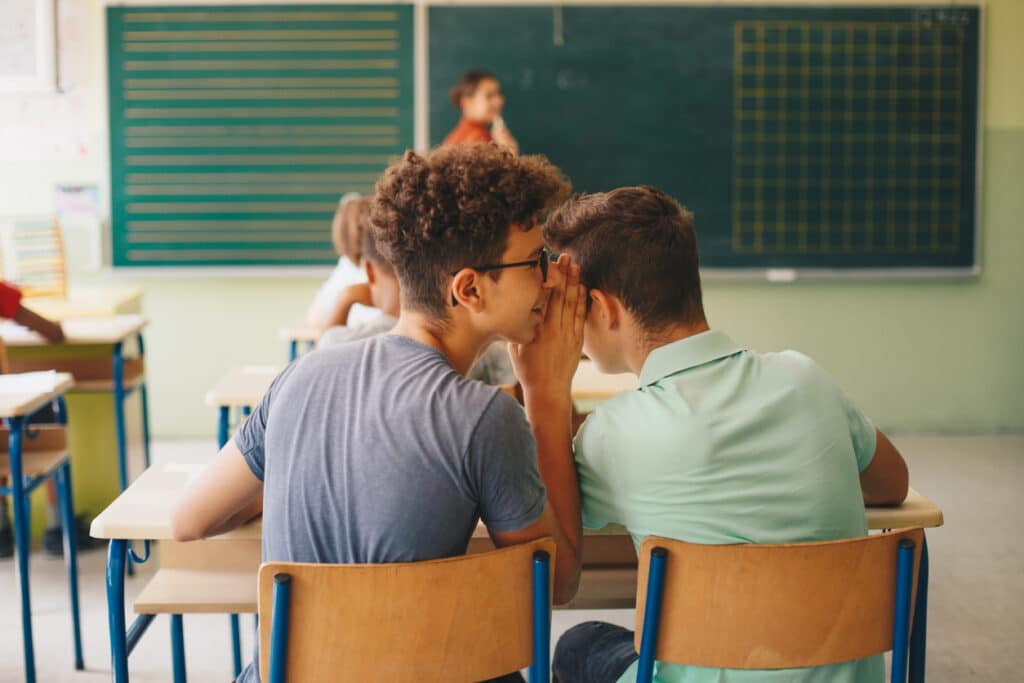

Classroom disruptions can make teaching more difficult, interrupt learning, and affect the experiences of students who are trying to concentrate. Frequent talking, calling out, refusing to begin assignments, and conflicts between classmates can take valuable time away from lessons. However, responding to every problem with punishment is not the only way to maintain order.
Teachers can learn how to reduce classroom disruptions by identifying the causes of challenging behavior, establishing clear expectations, building positive relationships, and creating lessons that encourage participation. These approaches focus on preventing problems and teaching students appropriate alternatives rather than relying primarily on penalties or public criticism.
A supportive classroom does not mean allowing students to ignore rules. It means combining clear boundaries with respectful communication, consistent guidance, and opportunities for students to develop responsibility.
This article explores practical classroom management strategies that help teachers prevent disruptions, respond calmly when problems occur, and create a learning environment where students can succeed.
What Causes Classroom Disruptions?
Before choosing a classroom management strategy, teachers should consider why a particular behavior occurs. The same behavior can have different causes depending on the student, activity, and classroom environment.
For example, a student who frequently interrupts might be seeking attention, struggling to wait for a turn, or finding it difficult to follow a lesson. Another student who refuses to complete work might feel overwhelmed by the assignment or may not understand the instructions.
Common causes of classroom disruptions include:
- Unclear expectations: Students may not understand what appropriate behavior looks like during different activities.
- Unengaging lessons: Long periods of passive listening or repetitive work can make it harder for students to stay focused.
- Academic frustration: Tasks that are too difficult, too easy, or poorly explained may lead to avoidance.
- Unpredictable routines: Frequent changes or unclear transitions can create confusion and unnecessary movement.
- Social conflicts: Disagreements, peer pressure, and relationship problems can affect student behavior.
- Difficulty with self-regulation: Some students need additional help managing emotions, attention, or impulses.
- Environmental distractions: Noise, crowded seating, and limited access to materials can interfere with learning.
Teachers should avoid assuming that every disruption is intentional disrespect. Observing when and where a behavior occurs can reveal patterns and help identify a more effective response.
Why Non-Punitive Classroom Management Can Be Effective
Non-punitive classroom management focuses on prevention, instruction, and constructive responses rather than using punishment as the main tool for changing behavior.
This approach does not eliminate accountability. Teachers still establish rules, address inappropriate conduct, and apply appropriate consequences when necessary. The difference is that responses are designed to help students understand expectations and practice better choices.
It teaches students what to do instead
Telling a student to stop interrupting does not automatically teach them how to participate appropriately. A teacher can explain how to signal a response, wait for a turn, and contribute during a discussion.
Teaching the replacement behavior gives students a practical skill they can use in future situations.
It protects student dignity
Public embarrassment, sarcasm, and repeated criticism can damage trust and turn a minor problem into a confrontation. Calm redirection allows teachers to address behavior without attacking a student’s character.
It supports stronger relationships
Students are more likely to accept guidance when they believe their teacher is fair and respectful. Positive relationships make it easier to discuss mistakes, identify barriers, and agree on realistic next steps.
It preserves instructional time
Proactive routines, clear instructions, and engaging activities can reduce the need for repeated corrections. Teachers can spend more time teaching and less time responding to preventable disruptions.
10 Strategies to Reduce Classroom Disruptions Without Punitive Discipline
The most useful strategies are those that fit the classroom’s age group, learning objectives, and specific behavioral challenges. Teachers can begin with a few approaches and gradually introduce additional supports.
1. Establish Clear and Consistent Expectations
Students need to understand what appropriate behavior looks like before they can consistently demonstrate it. Broad instructions such as “behave properly” or “show respect” may not be specific enough to guide everyday decisions.
Create a short set of classroom expectations and explain how they apply to different activities.
For example:
- During discussions, listen while others speak.
- During independent work, use a quiet voice and attempt the task before requesting help.
- During group activities, share materials and allow each person to contribute.
- During transitions, follow the agreed routine and move safely.
Model the expected behavior and give students opportunities to practice. Invite them to suggest examples of respectful participation, then connect those examples to the classroom rules.
Apply expectations predictably and fairly. Students should understand what happens when a rule is not followed, and responses should be appropriate to the situation.
2. Teach Classroom Routines Explicitly
Many disruptions happen during transitions, when students are unsure what to do next. Moving from one subject to another, collecting supplies, forming groups, or submitting assignments can become noisy if procedures are unclear.
Teach these routines just as you would teach an academic skill.
A useful routine for starting a lesson might involve the following steps:
- Enter the classroom and prepare the required materials.
- Read the instructions displayed on the board.
- Begin the opening task independently.
- Use the agreed signal to request assistance.
- Review the task when the teacher provides the next instruction.
Demonstrate the routine, let students practice, and provide feedback. Visual checklists and short reminders can help younger learners, while older students may prefer written procedures.
Revisit routines when they stop working or when the classroom schedule changes. Consistency reduces uncertainty and makes it easier for students to manage everyday responsibilities independently.
3. Use Positive Reinforcement and Specific Feedback
Positive reinforcement encourages students to repeat behaviors that support learning. Teachers can acknowledge appropriate actions through specific praise, constructive feedback, or other meaningful forms of recognition.
Instead of saying only “Excellent,” describe what the student did well.
For example:
- “You started the task as soon as the instructions were given.”
- “Your group disagreed respectfully and found a solution together.”
- “You waited until your classmate finished before responding.”
- “You noticed your mistake and corrected it independently.”
Specific feedback makes expectations easier to understand. It also helps students recognize their progress.
Avoid comparing students publicly or using praise to pressure classmates into competing with one another. Recognition should be sincere, inclusive, and focused on meaningful actions.
For some students, quiet acknowledgment or private feedback may be more comfortable than public praise. Teachers should consider individual preferences and avoid making students feel singled out.
4. Make Lessons More Interactive
Students may become distracted when they spend too much time listening without opportunities to participate. Engaging instruction gives them meaningful ways to use their attention and demonstrate understanding.
Teachers can introduce interaction through:
- Short question-and-answer activities.
- Think-pair-share discussions.
- Practical demonstrations.
- Small-group problem-solving.
- Hands-on learning tasks.
- Quick written responses.
- Student-led explanations.
- Short movement breaks when appropriate.
Break longer lessons into manageable sections. Explain the purpose of each activity and what students should complete before moving to the next stage.
For example, during a history lesson, students might examine a historical source individually, discuss its meaning with a partner, and then share one conclusion with the class. This structure encourages participation while providing clear boundaries for discussion.
If disruptions occur during a particular activity, review its pace, difficulty, and instructions before assuming that students simply lack motivation.
5. Redirect Behavior Calmly and Respectfully
When a disruption occurs, teachers often need to respond immediately. A calm, brief response can correct the behavior without stopping the entire lesson.
A useful sequence is:
- Pause and assess the situation.
- Use a nonverbal signal or move closer when appropriate.
- State the relevant expectation clearly.
- Provide a specific next step.
- Follow up privately if the behavior continues.
For instance, if two students begin talking during independent work, the teacher might point to the written task instructions and quietly say, “Please return to question three. You can discuss your answers during the group review.”
Avoid long public lectures, sarcasm, threats, or arguments that give a minor disruption more attention than it requires.
If a student is upset, allow appropriate space and time for the student to regain composure, provided everyone remains safe. Address the underlying issue when a productive conversation becomes possible.
6. Identify Patterns and Possible Triggers
Repeated disruptions often follow recognizable patterns. A student might become distracted during difficult assignments, interrupt during lengthy explanations, or argue when asked to transition away from a preferred activity.
Keeping brief, objective notes can help teachers understand these patterns.
Record details such as:
- What happened immediately before the behavior.
- The specific behavior observed.
- When and where it occurred.
- How adults and classmates responded.
- What helped the student return to learning.
Avoid labels such as “lazy,” “bad,” or “attention-seeking” in behavior records. Describe observable actions instead.
For example, write, “The student left the assigned seat three times during a 15-minute independent task,” rather than, “The student refused to behave.”
If the pattern suggests that the work is too difficult, adjust the task or provide additional instruction. If the behavior occurs during transitions, teach a clearer transition routine.
Where problems persist, collaborate with relevant school professionals to explore additional support.
7. Provide Appropriate Choices
Students sometimes resist tasks when they feel they have little control over how to approach them. Offering appropriate choices can increase participation while preserving academic expectations.
Teachers might allow students to choose:
- Which question to answer first.
- Which of two approved topics to investigate.
- Whether to work independently or with an assigned partner.
- Which available resource to use.
- Whether to demonstrate understanding through an approved written or oral format.
Choices should be genuine, limited, and appropriate for the activity.
For example, a teacher might say, “You need to complete both sections. Would you prefer to begin with the vocabulary questions or the short reading response?”
The learning goal remains unchanged, but the student has a reasonable degree of autonomy.
Do not present essential safety requirements or non-negotiable responsibilities as optional. The purpose is to encourage cooperation, not to remove classroom boundaries.
8. Strengthen Teacher-Student Relationships
Students may respond more positively to guidance when they believe their teacher understands them and wants them to succeed.
Building relationships does not require lengthy conversations every day. Small, consistent interactions can make a difference.
Teachers can:
- Greet students at the beginning of class.
- Learn about student interests and strengths.
- Listen carefully before responding to a concern.
- Recognize improvement as well as achievement.
- Follow through on promises and classroom agreements.
- Correct behavior without insulting or labeling students.
- Provide opportunities for students to ask questions privately.
When a student disrupts a lesson, separate the behavior from the student’s identity. Explain why the behavior is a problem and what needs to change, while communicating confidence that the student can improve.
Strong relationships do not replace expectations. They make it easier to maintain those expectations respectfully.
9. Teach Emotional Regulation and Conflict Resolution
Some classroom disruptions occur when students become frustrated, embarrassed, angry, or overwhelmed. Students may need direct instruction and practice to manage these emotions constructively.
Teachers can help students develop skills such as:
- Recognizing early signs of frustration.
- Taking a short pause before responding.
- Using words to describe feelings and needs.
- Asking for help appropriately.
- Listening to another person’s perspective.
- Suggesting solutions to disagreements.
- Returning to a task after a difficult moment.
For example, a teacher might teach students to say, “I disagree because…” rather than interrupting or insulting a classmate.
Reflection questions can help students think about an incident after everyone is calm:
- What happened?
- Who was affected?
- What could you do differently next time?
- What would help repair the situation?
Restorative conversations should be appropriate to the incident and should not force students who feel unsafe to confront another person. Bullying, threats, and serious harm require the school’s established safeguarding and behavior procedures.
10. Collaborate With Families and School Support Staff
Some disruptions continue despite consistent classroom strategies. In these situations, communication with families and school professionals can help teachers develop a more complete understanding of the student’s needs.
Start with specific observations and practical questions. Explain what has been happening, when it occurs, and which strategies have already been tried.
A constructive conversation might include:
- Sharing examples of the student’s behavior and progress.
- Asking whether similar difficulties occur in other settings.
- Identifying strategies that have helped previously.
- Agreeing on realistic goals and next steps.
- Reviewing progress after an appropriate period.
- Maintaining student confidentiality.
If behavior significantly interferes with learning or safety, seek assistance through the school’s established support system. Some students may benefit from individualized interventions, additional learning support, or a formal assessment by qualified professionals.
Collaboration should focus on understanding needs and improving outcomes rather than assigning blame.
Non-Punitive Responses to Common Classroom Disruptions
Different behaviors call for different responses. The following examples show how teachers can maintain boundaries without relying primarily on punitive discipline.
Students Who Frequently Call Out
Teach students how to participate, such as raising a hand, using response cards, or recording an idea before sharing it. Reinforce appropriate participation and provide regular opportunities for students to contribute.
If calling out continues, speak privately with the student to identify what makes waiting difficult and agree on a practical reminder or support.
Students Who Refuse to Start Assignments
Check whether the instructions are clear and the task is manageable. Model the first step, break the assignment into smaller sections, and offer an appropriate choice about where to begin.
Maintain the expectation that the student will engage with the work, while identifying barriers that may require additional support.
Students Who Distract Their Classmates
Use a quiet reminder, adjust seating when appropriate, or clarify the expectations for collaborative and independent work. Make sure the student has a clear task and understands what successful participation looks like.
If the behavior repeatedly affects others, discuss the impact privately and agree on a specific plan for future lessons.
Students Who Argue With the Teacher
Avoid turning the disagreement into a public contest. Keep your response brief, acknowledge the student’s concern where appropriate, and restate the expectation.
For example, a teacher might say, “I hear that you disagree. We can discuss your concern privately, but right now everyone needs to follow the activity instructions.”
Return to the conversation when it can happen calmly and constructively.
Students Who Have Emotional Outbursts
Prioritize safety, reduce unnecessary stimulation where possible, and use a calm, respectful tone. Avoid crowding, shaming, or demanding an immediate explanation while the student is highly distressed.
Follow school procedures when there is a risk of harm. After the situation has settled, work with the student and relevant staff to identify triggers, helpful supports, and steps for returning to learning.
Punishment vs. Constructive Consequences: Understanding the Difference
Reducing reliance on punitive discipline does not mean eliminating all consequences. Students need to understand that actions have effects and that classroom expectations apply consistently.
The important distinction is between a response that primarily seeks to penalize a student and one that helps the student take responsibility, repair harm, or learn an alternative behavior.
| Punitive response | Constructive alternative |
|---|---|
| Publicly humiliating a student for interrupting | Give a brief, respectful reminder and teach the appropriate participation routine |
| Removing a student from an activity without addressing the problem | Identify the barrier and agree on how the student can participate appropriately |
| Using a blanket penalty for an entire class | Address the specific behavior and individual responsibility |
| Giving a long lecture after a minor disruption | Use concise redirection and return attention to learning |
| Expecting an apology without reflection | Guide the student to understand the impact and make appropriate amends |
Constructive consequences should be proportionate, predictable, and connected to the behavior whenever possible. For example, a student who damages classroom materials may be expected to help restore them appropriately under adult guidance.
Serious incidents still require appropriate intervention, documentation, and school procedures. Non-punitive practice should never be used as a reason to ignore harm, bullying, threats, or safety concerns.
How to Create a Classroom Disruption Prevention Plan
A simple prevention plan can help teachers move from reacting to individual incidents toward making systematic improvements.
Step 1: Identify the Main Problem
Choose one specific behavior that regularly interrupts learning. Examples include calling out during explanations, delayed transitions, or off-task behavior during independent work.
Avoid trying to address every classroom issue at once.
Step 2: Observe When It Happens
For several lessons, record when the behavior occurs and what happens beforehand. Look for patterns involving activity type, task difficulty, seating, instructions, or transitions.
Step 3: Choose a Preventive Strategy
Select a strategy that addresses the likely cause. If students become noisy during transitions, teach and practice a transition routine. If students struggle to begin work, provide a clear first step and check their understanding.
Step 4: Teach the Expected Alternative
Explain what students should do instead, model it, and provide opportunities to practice. Give reminders before predictable problem situations occur.
Step 5: Monitor Progress
Review whether the behavior is happening less often and whether students are spending more time engaged in learning. Brief records can help reveal whether the approach is useful.
Step 6: Adjust or Seek Additional Support
If the strategy is not effective, review the possible causes and consider another approach. For persistent or serious concerns, collaborate with school support staff and follow relevant policies.
The goal is steady improvement rather than instant perfection.
Frequently Asked Questions
How can teachers reduce classroom disruptions without punishment?
Teachers can reduce disruptions by teaching clear expectations, establishing predictable routines, designing engaging lessons, using calm redirection, providing specific positive feedback, and identifying the causes of recurring behavior. When consequences are necessary, they should be fair, proportionate, and focused on accountability and learning.
What is the best way to handle disruptive students?
There is no single strategy that works for every student. Begin by identifying the specific behavior and the circumstances in which it occurs. Respond calmly, explain the expectation, teach an appropriate alternative, and monitor progress. Persistent or serious behavior may require collaboration with families and school professionals.
Does positive classroom management mean having no consequences?
No. Positive classroom management includes clear boundaries and consistent responses. It differs from a punishment-centered approach by emphasizing prevention, teaching, respectful correction, and appropriate opportunities to repair harm. Safety concerns and serious incidents must still be addressed through established school procedures.
How can teachers prevent disruptions during transitions?
Teach students exactly what to do when an activity ends and another begins. Prepare materials in advance, provide concise instructions, use a consistent signal, and allow students to practice the routine. Reviewing transitions and adjusting the classroom layout can also reduce unnecessary confusion and movement.
How can teachers help students who repeatedly refuse to work?
First, determine whether the student understands the assignment and has the skills needed to complete it. Break the task into smaller steps, model an example, and offer an appropriate choice. If refusal continues, document patterns and seek additional support where necessary.
When should a teacher seek professional support for classroom behavior?
Seek support when disruptions are persistent, significantly affect learning, suggest unmet learning or emotional needs, or raise concerns about safety. School counselors, special education professionals, behavior specialists, and school leaders may help develop appropriate interventions in line with school policy.
Conclusion
Learning how to reduce classroom disruptions requires more than reacting to unwanted behavior. Teachers can make meaningful progress by identifying triggers, setting clear expectations, teaching predictable routines, strengthening relationships, and designing activities that encourage active participation.
A non-punitive approach still includes accountability. The difference is that teachers use respectful redirection, constructive consequences, and explicit instruction to help students understand expectations and develop better responses.
Start with one recurring classroom challenge, choose a practical preventive strategy, and observe the results. With consistency, reflection, and appropriate collaboration, teachers can create calmer learning environments where students are supported, responsible, and better prepared to succeed.