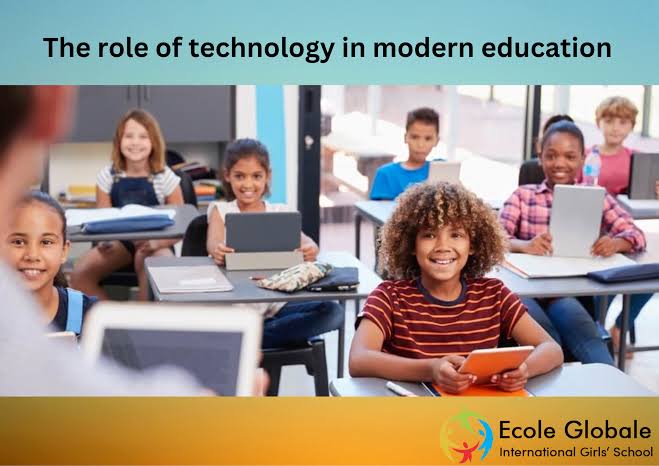

Technology has become an important part of modern education. Classrooms today are very different from those of previous generations. Students can access digital books, educational videos, online courses, interactive activities, and virtual classrooms with only a few clicks. Teachers can also use technology to explain difficult concepts, communicate with students, and organize learning materials more effectively. When used thoughtfully, technology can make education more accessible, flexible, and engaging.
One of the most significant advantages of technology in education is access to information. In the past, students often depended mainly on textbooks and physical libraries. Today, digital resources provide access to a much wider range of information. Students can research historical events, scientific discoveries, mathematical concepts, and current developments without waiting to find a particular book. This access encourages students to explore subjects beyond what is covered during classroom lessons.
Technology can also support different learning styles. Every student learns in a slightly different way. Some understand concepts better through reading, while others benefit from visual explanations, demonstrations, or practical activities. Educational technology can combine text, images, audio, animation, and video. For example, a science teacher can use an animation to demonstrate how the human heart works, while a language teacher can use audio exercises to improve pronunciation.
Another important benefit is personalized learning. Traditional classrooms often require teachers to follow the same lesson plan for an entire group of students. Digital platforms can provide exercises based on individual progress. Students who need additional practice can spend more time on a particular topic, while students who understand the material quickly can move toward more advanced activities. This approach can help reduce learning gaps and give students greater control over their education.
Technology has also changed communication between teachers, students, and parents. Online classroom systems allow teachers to share assignments, announcements, learning resources, and feedback in one place. Students can submit work digitally and receive comments without waiting for the next classroom session. Parents may also have better visibility into academic progress when schools provide appropriate communication systems.
Online education has expanded opportunities for students who cannot attend traditional classrooms. Distance learning can be particularly useful for people living far from educational institutions, working students, and learners who need flexible schedules. Online courses allow students to study from home and sometimes choose their own learning pace. This flexibility has made education more accessible to a broader population.
However, technology also creates challenges. Not every student has equal access to computers, tablets, or reliable internet connections. This digital divide can create additional inequalities if schools assume that every learner has the same resources at home. Educational institutions need to consider access, affordability, and technical support when introducing new digital systems.
Another challenge is distraction. Smartphones, social media, games, and entertainment platforms can easily compete for students’ attention. Technology becomes useful only when students understand how to use it responsibly. Teachers can help by establishing clear expectations and teaching digital responsibility rather than simply banning technology.
Privacy and online safety are also important considerations. Students and schools increasingly use digital platforms that collect information. Educational institutions should select reliable systems, protect student data, and teach learners about strong passwords, suspicious messages, and responsible online behavior.
Teachers remain central to the learning process despite technological development. Technology should support teachers rather than replace them. A digital presentation cannot fully replace a teacher who understands a student’s difficulties, motivation, and personal circumstances. The most effective educational environments combine human guidance with useful technological resources.
In conclusion, technology has transformed modern education by improving access to information, supporting personalized learning, expanding communication, and creating flexible educational opportunities. At the same time, schools must address challenges involving access, distraction, privacy, and responsible use. Technology is most valuable when it is used with a clear educational purpose. When teachers, students, parents, and institutions work together, digital tools can become a powerful part of a modern learning environment.
