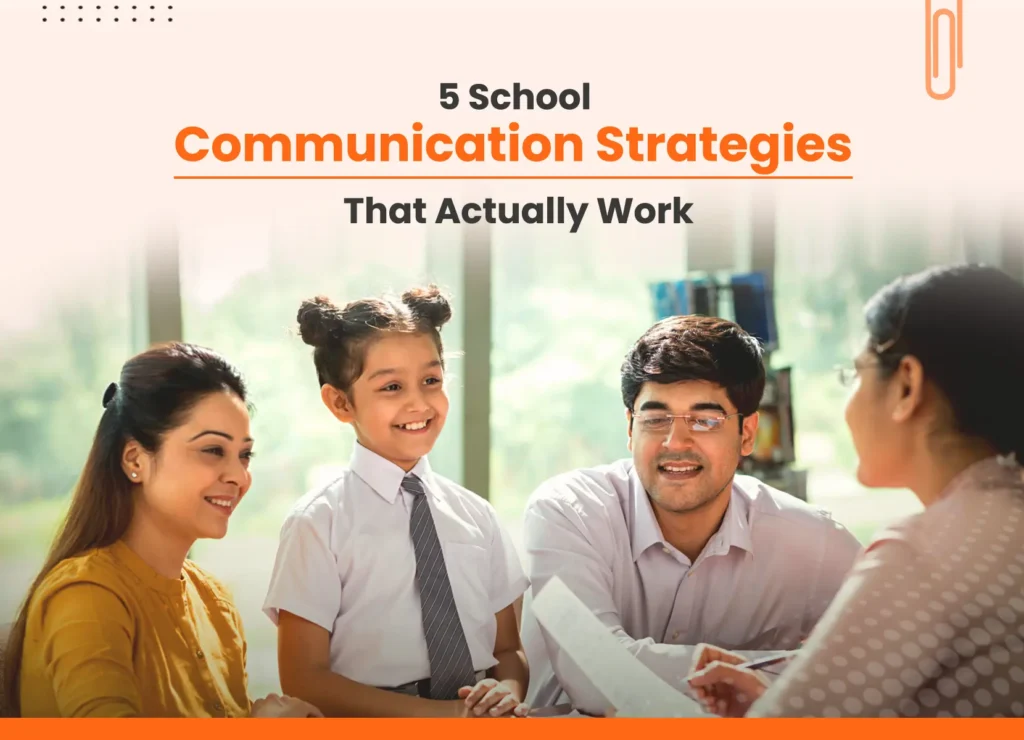

Effective communication between school staff and parents is essential for creating a positive learning environment. When teachers, school administrators, and families share information regularly, students receive better academic support, develop stronger social skills, and feel more confident in their education. Clear communication also helps schools address concerns early, build trust with families, and create a stronger sense of community.
However, maintaining consistent communication can be challenging. Teachers have busy schedules, parents may have limited availability, and important messages can sometimes be misunderstood or overlooked. Schools need practical systems that make communication clear, accessible, respectful, and useful for everyone involved.
This guide explores effective school communication strategies that help teachers and parents work together, improve family engagement, and support student success.
Why Communication Between Schools and Parents Matters
Parents play an important role in their children’s education, but they need accurate information to provide meaningful support at home. Similarly, teachers benefit from understanding students’ interests, learning needs, home circumstances, and challenges.
Strong school-family communication offers several benefits:
- Improved academic performance: Parents can reinforce classroom learning and help students establish productive study habits.
- Better student behavior: Teachers and parents can work together to encourage positive behavior and address recurring concerns.
- Early identification of problems: Regular communication helps identify academic difficulties, attendance issues, or emotional challenges before they become more serious.
- Stronger relationships: Respectful conversations build trust between families and school staff.
- Greater parental involvement: When parents understand school expectations and activities, they are more likely to participate in their children’s education.
Communication should not happen only when a student experiences a problem. Consistent, positive contact helps families feel connected to the school throughout the academic year.
1. Establish Clear Communication Channels
One of the most effective school communication strategies is to establish clear channels for different types of messages. When parents know where to find information and whom to contact, communication becomes more efficient.
Schools may use several channels, including:
- School websites for announcements, calendars, policies, and important documents.
- Email for detailed updates, meeting arrangements, and individual concerns.
- School communication applications for reminders, classroom news, and quick messages.
- Phone calls for urgent matters or sensitive discussions.
- Parent-teacher meetings for detailed conversations about academic progress and student development.
- Printed notices for families who cannot easily access digital communication.
Schools should explain which channel is best for each purpose. For example, routine reminders might be sent through a school application, while a serious concern about student behavior may require a private phone call or meeting.
Avoid sending the same information through too many channels, as this can confuse families. A consistent communication policy helps staff deliver messages in an organized and predictable way.
2. Use Simple, Clear, and Respectful Language
Communication is most effective when parents can quickly understand the information being shared. Educational terminology, lengthy messages, and unclear instructions can make school updates difficult to follow.
Teachers and administrators should use straightforward language and explain unfamiliar terms when necessary. Messages should identify the main point, explain why it matters, and describe any action parents need to take.
For example, instead of writing, “Your child demonstrates inconsistent task completion and requires additional academic monitoring,” a teacher could say, “Your child sometimes has difficulty finishing class assignments. We would like to discuss a few ways we can help them complete their work.”
The second message communicates the concern more clearly and encourages cooperation rather than creating anxiety.
Staff should also maintain a respectful tone, even when discussing challenging situations. Parents are more likely to engage constructively when they feel their concerns are being taken seriously.
3. Share Regular Updates About Student Progress
Parents need more than report cards to understand how their children are progressing. Regular updates help families recognize improvements, identify areas for growth, and provide appropriate support at home.
Teachers can share progress through brief emails, scheduled calls, learning portfolios, progress reports, or parent-teacher conferences.
Useful updates may include:
- Academic strengths and areas that need improvement.
- Progress toward learning objectives.
- Classroom participation and assignment completion.
- Attendance and punctuality patterns.
- Social development and interactions with classmates.
- Practical suggestions for supporting learning at home.
Communication should include positive achievements as well as concerns. When parents hear only negative feedback, they may begin to associate school contact with problems. Recognizing effort, improvement, and responsible behavior creates a more balanced relationship.
Updates should also be specific. Rather than saying that a student needs to improve in mathematics, a teacher might explain that the student understands basic multiplication but needs additional practice solving word problems.
Specific information gives parents a clearer understanding of how to help.
4. Make Parent-Teacher Meetings More Productive
Parent-teacher meetings provide valuable opportunities to discuss student development in greater detail. However, these meetings are most useful when both sides have time to prepare and clear goals for the conversation.
Before a meeting, teachers can review academic records, classroom observations, assignments, and previous communication. Parents can prepare questions about learning progress, homework, friendships, behavior, or areas where their child needs support.
A productive meeting should include:
- A discussion of the student’s strengths and recent achievements.
- An explanation of any academic or behavioral concerns.
- An opportunity for parents to share observations from home.
- Agreement on practical steps that school staff and families can take.
- A follow-up plan to review progress.
Teachers should avoid making parents feel blamed for a student’s difficulties. Instead, the conversation should focus on shared goals and realistic solutions.
For families unable to attend in person, schools can offer phone conferences, video meetings, or alternative appointment times. Flexible options help more parents participate meaningfully.
5. Encourage Two-Way Communication
Communication should not be limited to schools sending information to families. Parents also need opportunities to ask questions, share concerns, and provide feedback.
Two-way communication helps teachers understand issues that may affect learning, including changes in routines, difficulties with homework, language barriers, or challenges with attendance.
Schools can encourage open dialogue by providing dedicated contact times, parent feedback forms, short surveys, family meetings, and opportunities to speak with school administrators.
Teachers should acknowledge messages within a reasonable timeframe and explain when a detailed response will be available. Even when an issue cannot be resolved immediately, a timely acknowledgment reassures parents that their concerns have been received.
Schools should also communicate their expected response times and clarify which matters require urgent contact. This prevents misunderstandings and helps staff manage communication workloads.
6. Use Technology to Improve School Communication
Digital tools can make school communication faster and more convenient. School portals, messaging applications, email newsletters, and online calendars allow parents to access important information without needing to visit the school.
Technology can be particularly useful for sharing:
- Homework assignments and upcoming deadlines.
- School events and schedule changes.
- Attendance notifications.
- Classroom activities and learning resources.
- Permission forms and school announcements.
- Meeting invitations and progress updates.
However, technology should support communication rather than replace personal interaction. Sensitive matters often require a phone call or private conversation instead of a short message.
Schools should also consider digital accessibility. Not every family has reliable internet access, a smartphone, or the same level of digital confidence. Providing alternative communication methods helps prevent families from being excluded.
Privacy is equally important. Staff should use approved school communication systems, protect student information, and avoid sharing confidential details in public groups or unsecured channels.
7. Make Communication Accessible to Every Family
Families have different languages, cultural backgrounds, schedules, and accessibility needs. A communication strategy that works for one group may not work for everyone.
Schools should identify barriers that prevent parents from receiving or understanding important information and take reasonable steps to address them.
Helpful approaches include:
- Translating essential notices into commonly used family languages.
- Providing interpretation for important meetings when available.
- Offering phone, online, and in-person communication options.
- Using readable formatting and accessible digital documents.
- Scheduling meetings at different times when possible.
- Providing printed copies of important information when needed.
Schools should avoid assuming that a parent who does not attend meetings or respond to messages is uninterested in education. Work commitments, transportation difficulties, language barriers, and technology access may all affect participation.
An inclusive approach helps schools build relationships with a wider range of families and ensures that important information reaches those who need it.
8. Communicate Concerns Early and Constructively
Academic, behavioral, and attendance concerns are easier to address when communication begins early. Waiting until a problem becomes serious can make parents feel surprised, frustrated, or excluded from the process.
Teachers should document relevant observations and contact parents when a pattern begins to emerge. Messages should describe specific situations rather than make assumptions about a student’s character or a family’s involvement.
For example, instead of saying, “Your child is careless and does not take school seriously,” a teacher could explain, “Several assignments have been submitted late this month. Could we discuss what may be making it difficult to complete the work on time?”
This approach invites parents to share information and work toward a solution.
When discussing sensitive concerns, staff should protect student confidentiality and choose an appropriate private setting. The conversation should focus on observable behavior, its impact on learning, and the support that may help the student improve.
A shared action plan can clarify responsibilities and establish a date for reviewing progress.
9. Build Positive Relationships Beyond Problems
Strong school-family relationships develop through regular, meaningful interactions. If parents hear from teachers only when something goes wrong, they may become reluctant to answer calls or attend meetings.
Schools can build trust by celebrating student achievements, sharing classroom highlights, thanking parents for their contributions, and recognizing improvements in effort or behavior.
Teachers might send a short message when a student demonstrates kindness, completes a challenging assignment, helps a classmate, or makes noticeable progress in reading.
Positive communication does not need to be lengthy. A specific and sincere message can reassure parents that teachers recognize their child’s individual strengths.
Schools can also organize family learning events, classroom exhibitions, reading activities, workshops, and community gatherings. These opportunities allow parents to understand classroom expectations and develop stronger relationships with school staff.
When communication includes positive experiences, families are more likely to view teachers as partners in their children’s development.
10. Create a Consistent School Communication Policy
Individual teachers may have different communication habits, but families benefit when the school follows consistent expectations.
A school communication policy should explain how information is shared, which channels are approved, how quickly staff should respond, and how confidential matters are handled.
The policy may cover:
- Appropriate communication methods for routine and urgent issues.
- Expected response times during school working hours.
- Procedures for reporting academic, behavioral, and attendance concerns.
- Guidelines for protecting student information.
- Parent-teacher meeting schedules.
- Translation and accessibility arrangements.
- Steps for resolving communication misunderstandings.
School leaders should review the policy with staff and make it available to parents at the beginning of the academic year.
Consistency reduces confusion and helps parents know what to expect. It also gives teachers a shared framework for managing communication fairly and professionally.
11. Gather Feedback and Measure Communication Effectiveness
Schools should regularly evaluate whether their communication practices are meeting family needs. Sending more messages does not automatically lead to better communication. The important question is whether parents receive, understand, and can act on the information.
Schools can gather feedback through brief surveys, parent meetings, focus groups, and conversations with teachers and support staff.
Useful questions include:
- Do parents know how to contact the appropriate staff member?
- Are school messages clear and easy to understand?
- Do families receive updates often enough?
- Are communication channels accessible to different households?
- Do parents feel comfortable raising concerns?
- Are follow-up actions completed as promised?
Schools can also monitor meeting participation, response times, attendance-related communication, and feedback trends. These indicators should be used to improve systems, not to blame families or rank teachers unfairly.
After collecting feedback, administrators should identify a small number of improvements, communicate the changes, and review their effectiveness later.
A continuous improvement approach helps schools adapt their communication practices as family needs and technology change.
12. Help Teachers Develop Strong Communication Skills
Effective communication requires practice, empathy, and professional judgment. Schools can support staff by offering training on active listening, conflict resolution, family engagement, inclusive communication, and professional digital messaging.
Active listening is particularly important. Rather than immediately defending a school decision, teachers should first understand the parent’s concern, ask clarifying questions, and summarize what they have heard.
When disagreements occur, staff should remain calm, focus on specific facts, and return the conversation to the student’s needs. If a concern requires additional authority or support, teachers should follow the school’s established procedures for involving administrators or relevant specialists.
Professional development can also help teachers communicate difficult information without damaging relationships. Role-playing exercises and shared examples of effective messages can give staff practical ways to handle challenging conversations.
When teachers feel prepared and supported, they are better able to maintain respectful relationships with families.
Common School Communication Mistakes to Avoid
Even well-intentioned communication can become ineffective when schools overlook basic principles. Avoiding common mistakes helps keep families informed and relationships constructive.
Contacting parents only about problems: Include positive feedback and routine updates throughout the year.
Sending overly complicated messages: Use clear language, short paragraphs, and specific instructions.
Assuming every family has equal access to technology: Offer alternatives for parents who cannot use digital tools reliably.
Discussing sensitive matters in public channels: Use private, approved methods to protect student confidentiality.
Ignoring parent feedback: Acknowledge concerns and explain what steps will be taken.
Failing to follow up: Confirm agreed actions and review progress when promised.
Expecting immediate responses at all times: Set reasonable communication boundaries and communicate expected response times clearly.
Addressing these issues makes communication more reliable and helps staff and families maintain a productive partnership.
A Simple School Communication Plan
Schools that want to improve communication can begin with a manageable plan rather than introducing many new tools at once.
| Timeframe | Communication action | Purpose |
|---|---|---|
| Beginning of the school year | Share staff contacts, communication channels, and school policies | Establish clear expectations |
| Weekly or biweekly | Send classroom updates or important reminders | Keep families informed |
| Monthly | Share learning progress, upcoming events, and practical home-support suggestions | Encourage continued involvement |
| Each term | Arrange parent-teacher conferences or progress discussions | Review student development |
| Throughout the year | Contact families about concerns and positive achievements | Build trust and address needs early |
| End of each term | Collect feedback and review communication practices | Identify improvements |
Schools should adapt this plan to their size, resources, student needs, and family preferences. The goal is not to create unnecessary messages but to make communication timely, relevant, and consistent.
Conclusion
Improving communication between school staff and parents requires clear expectations, regular updates, accessible communication channels, and a willingness to listen. When families understand school goals and teachers understand family concerns, both sides can provide more consistent support for student learning and development.
The most effective school communication strategies combine digital tools with personal conversations, positive feedback with constructive guidance, and consistent policies with flexibility for individual family needs.
Schools can begin by selecting a few practical improvements, such as clarifying communication channels, scheduling regular progress updates, and offering more opportunities for parent feedback. Over time, these steps can strengthen trust, increase family engagement, and create a more supportive educational environment for every student.